Building Capabilities Across Leadership, Management and Manufacturing Clusters
The transition to a circular textile economy requires much more than just new technologies or sustainability commitments. It requires people at every level of the value chain to understand what circularity means for their decisions, processes, and operations.
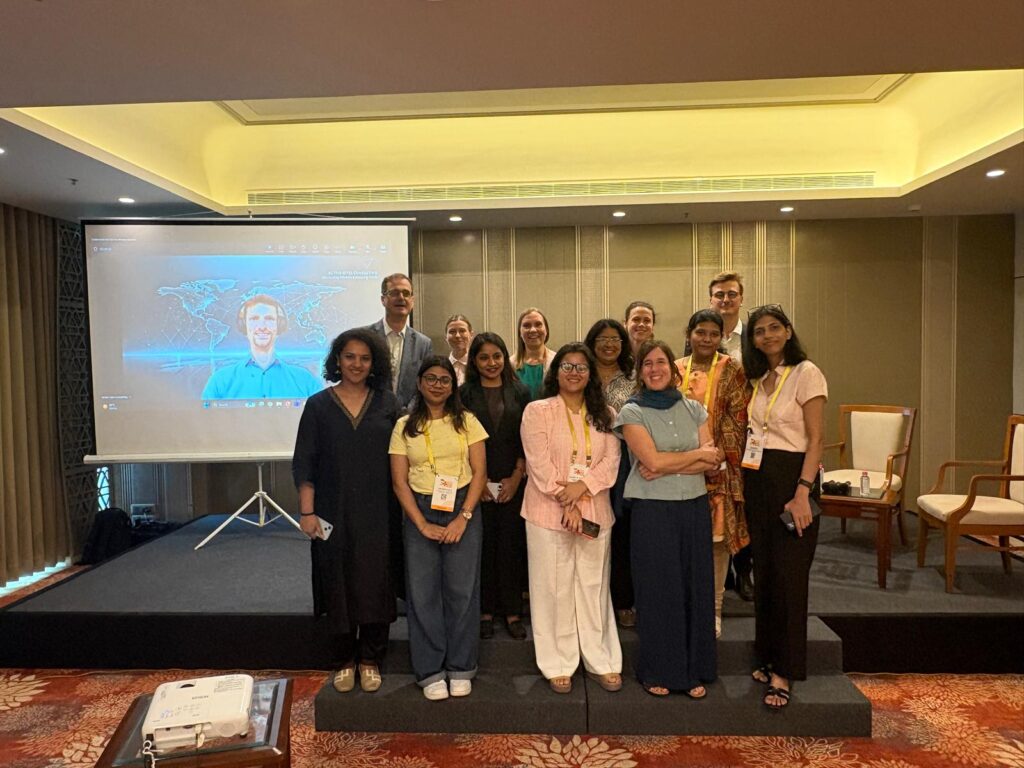
The International Council for Circular Economy (ICCE) has been working to translate circular-economy principles into practical capabilities for the textile and apparel sector—building knowledge among business leaders, managers, manufacturing teams, MSMEs and industrial clusters. ICCE contributed to developing a comprehensive circular-economy curriculum and capacity-building programme tailored to different levels of the organisation and its textile ecosystem.
The approach recognises an important reality: Circular transformation cannot sit only within the sustainability department. It must become a capability distributed across the organisation and its supply chain.
Capability Across Organisational Levels
ICCE’s textile-skilling approach works around the different decisions made at different levels of the organisation. The knowledge required by a business leader considering future competitiveness is fundamentally different from that required by a production manager responsible for material efficiency or a cluster enterprise attempting to implement circular practices on the factory floor. The programme therefore differentiated learning across three broad organisational levels.
Leadership and Higher Management
For senior management, the focus was on understanding circular economy as a business, competitiveness and transition strategy. The programme helped leadership examine issues such as:
why circularity is becoming strategically important for the textile and apparel sector;
changing global sustainability expectations;
implications of resource constraints and material dependence;
circular business models;
sustainable product and material strategies;
emerging policy and market developments;
the relationship between circular economy, climate objectives and business resilience;
supply-chain transformation; and
the role of leadership in embedding circularity into organisational decision-making.
At this level, the objective was not simply to explain circular-economy terminology. It was to enable management to understand how circularity could influence strategy, investment, procurement, innovation, product development and long-term competitiveness.
Translating Strategy into Action: Middle Management
Middle management plays a particularly important role in a circular transition. This is where corporate sustainability objectives must be translated into operational decisions involving sourcing, production, quality, waste, energy, materials, suppliers and product development. ICCE therefore developed learning content that helped managers connect broader circular-economy principles with the realities of textile manufacturing and apparel value chains. The capacity-building programme addressed themes such as:
material efficiency;
production waste reduction;
reuse and recycling of textile materials;
circular procurement;
sustainable sourcing;
resource efficiency;
waste-stream identification;
opportunities for closing material loops;
product lifecycle thinking;
collaboration with suppliers;
circular design considerations;
measurement of circularity; and
development of practical circular interventions within business operations.
The intention was to move participants from the question:
“What is circular economy?” to: “What does circular economy change in the decisions I make every day?”
Taking Circularity to Textile Clusters
India’s textile value chain features a large ecosystem of manufacturers, processors, suppliers, MSMEs, and specialised units operating within industrial clusters. For circularity to scale, these enterprises must be part of the transition. ICCE conducted multiple capacity-building and training engagements within textile clusters associated with the Aditya Birla ecosystem, helping participants understand how to apply circular-economy principles in manufacturing environments. Cluster-level learning was deliberately designed to be practical and contextual. Rather than presenting circular economy only as a theoretical sustainability concept, the sessions connected it with operational issues such as:
material losses during production; textile waste;
segregation of waste streams;
reuse of production residues;
opportunities for recycling;
resource efficiency; material recovery;
water and energy use;
process optimisation;
collaboration across supply chains; and
opportunities for new circular business models.
This approach is particularly important for MSMEs, where the transition to circularity must ultimately demonstrate practical operational or business value.
Why Skills Matter for Circular Textiles
Textile circularity requires significant changes across the lifecycle of a product.
Materials need to be selected differently.
Products increasingly need to be designed for longer life, repair, reuse or recycling.
Manufacturing waste needs to become a resource.
Post-industrial and post-consumer textiles require collection and processing systems.
Supply chains need better information and traceability.
Recyclers need predictable material streams.
And businesses must increasingly understand the environmental and resource implications of their products.
Each of these transitions creates a skills requirement. Circular textiles therefore cannot be achieved simply through a sustainability policy or corporate target. It requires people capable of making different decisions across:
Design → Material Selection → Procurement → Production → Use → Collection → Sorting → Reuse → Recycling → Secondary Materials
ICCE’s capacity-building work seeks to develop this capability across the value chain.
Preparing Industry for the Next Generation of Textile Requirements
The international textile market is also undergoing a major regulatory and market transition. Circularity, durability, recycled materials, transparency, traceability and product-level sustainability information are becoming increasingly important dimensions of competitiveness. ICCE has consequently expanded its work beyond conventional resource-efficiency training to include emerging themes such as:
circular product design;
Digital Product Passports;
traceability;
Ecodesign for Sustainable Products Regulation;
Extended Producer Responsibility;
recycled and secondary materials;
circular textile business models; and
readiness of MSMEs for emerging sustainability requirements.
ICCE’s work under the EU–India policy dialogue on the Ecodesign for Sustainable Products Regulation (ESPR) has further reinforced the importance of industry capacity building. Consultations conducted with Indian businesses indicated that MSMEs in particular require structured technical support, sector-specific training tools and clearer pathways for adapting to emerging requirements around product sustainability and Digital Product Passports. This reinforces ICCE’s broader philosophy:
Policy readiness must be accompanied by skills readiness.