Circular Economy for Electronics & Electrical Equipment
From E-Waste Management to Circular Electronics
Electronics is one of the fastest-evolving areas of the circular economy. The growing consumption of electrical and electronic equipment, the increasing generation of e-waste, dependence on critical materials, changing Extended Producer Responsibility requirements, and emerging expectations around repairability, ecodesign, and product traceability are fundamentally changing the sector.
ICCE works across the electronics lifecycle to help move the conversation from managing e-waste to designing circular electronics systems. Our work connects policy, industry, skills and product strategies through three interconnected areas.
Circular Strategies
RECYCLED CONTENT in NEW PRODUCTS- Making electronic products from recycled materials, and ensuring they are designed to be recycled again at the end of their life. Hazardous substances are also phased out
LONGER USE: Designing electrical products and their components for longevity, coupled with robust options of reuse (including repair, resale, refurbish, and remanufacture)
RESPONSIBLE RECYCLING: Products no longer suitable for use or reuse are collected, sorted, and recycled using responsible practices and standards supporting climate action, decent work and a just transition. There are no illegal shipments of e-waste
ICCE's areas of work
Skilling & Capacity Building
A circular electronics economy requires new capabilities across the value chain—from technicians handling end-of-life equipment to businesses, recyclers, policymakers and future professionals.
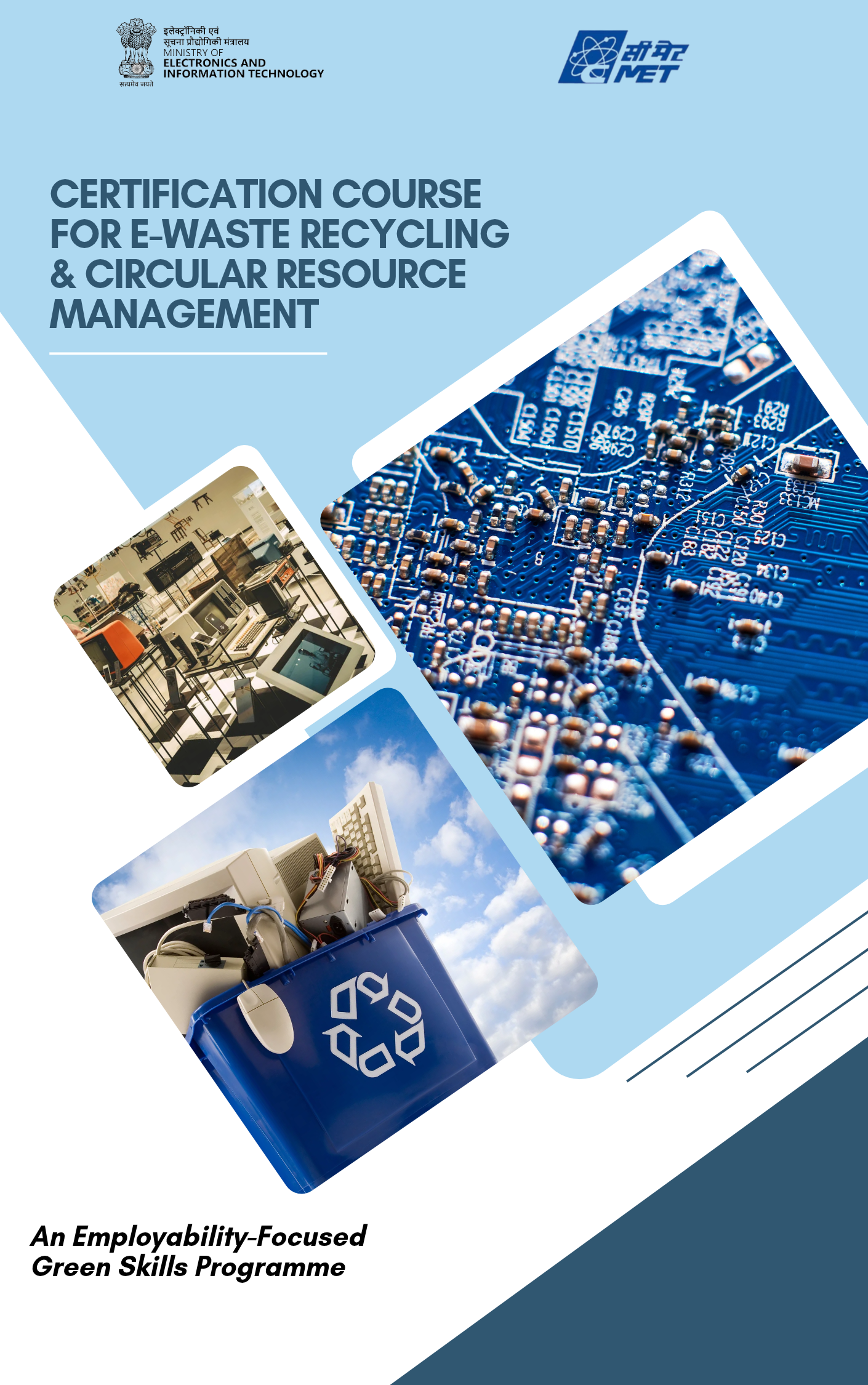
ICCE has developed a comprehensive theory and practical curriculum for Industrial Training Institutes (ITIs) on E-Waste Recycling and Circular Resource Management, connecting vocational education with green jobs, safe recycling, repair, refurbishment, resource recovery and circular entrepreneurship.
Our wider capacity-building work addresses industry, educational institutions, government stakeholders and the e-waste ecosystem, with increasing emphasis on the relationship between secondary-resource recovery, critical minerals and future green jobs.
Circular Design Strategies
The greatest opportunity for circularity occurs before a product becomes waste.
ICCE’s work therefore looks upstream—at how we can design and manage electrical and electronic products for durability, repairability, reuse, refurbishment, disassembly, remanufacturing and material recovery. Our work explores how circular design principles can reduce lifecycle impacts while retaining the value embedded in products, components and materials for longer. This includes the emerging relationship between product design, repair ecosystems, reverse logistics, secondary materials and Digital Product Passports.
Regulations & Compliance
Evolving environmental and product regulations increasingly shape electronics.
ICCE works at the interface of policy and implementation, helping stakeholders understand developments around Extended Producer Responsibility, e-waste regulation, resource efficiency, ecodesign, standards, traceability and Digital Product Passports.
Our work also examines how Indian businesses can prepare for emerging international product requirements while strengthening domestic circular-economy systems.
Design better products → Extend product life → Enable repair and reuse → Recover components and materials → Strengthen secondary-resource systems → Reduce dependence on virgin resources
For ICCE, circular electronics is ultimately about retaining the economic and material value embedded within products for as long as possible.
Get Involved in our projects
Innovation & Technology
Education and Behavior Change
Membership
Green Skills
Listen to Experts
Global Initiatives
Policies in India:
India’s electronics sector is embracing the principles of the circular economy to create a more sustainable and resilient future. By implementing progressive policies, fostering innovation, and promoting collaboration, India is not only addressing the environmental impacts of electronic waste but also unlocking new opportunities for economic growth and technological advancement.