Introduction
By 2050, the world is expected to generate 3.4 billion tonnes of waste every year—a staggering figure that highlights the scale of our global waste crisis. Yet, as of today, less than one-third of this waste is managed in ways that are safe for people and the planet. The rest ends up in overflowing landfills, polluting rivers, choking ecosystems, and contributing to climate change.
In India, the challenge is even more urgent. Rapid urbanization, changing lifestyles, and a dependence on single-use plastics have dramatically increased the waste burden in cities and towns. Landfills are reaching dangerous levels, municipal systems are overstretched, and the environmental and health impacts are being felt most severely by vulnerable communities.
Traditional approaches—focused largely on collection and disposal—are proving inadequate. What is needed is a paradigm shift: from linear “take-make-dispose” systems to circular, community-driven solutions where waste is not discarded but continuously reused, recycled, or composted. This is where the idea of Zero Waste to Landfill (ZWL) becomes critical. ZWL is not about managing waste at the end of its journey—it is about redesigning systems so that very little, or ideally nothing, reaches the landfill in the first place.
Over the last few years, through the Why Waste Wednesdays Foundation (WWWF) and the Navjeevan Residents Welfare Association (RWA), I have been working to translate this vision into practice. Together with citizens, schools, markets, hospitals, and institutions, we have piloted and scaled innovative models of Zero Waste to Landfill. These models show that when people participate actively, when systems are transparent and accountable, and when circularity is made visible, change is not only possible—it is replicable.
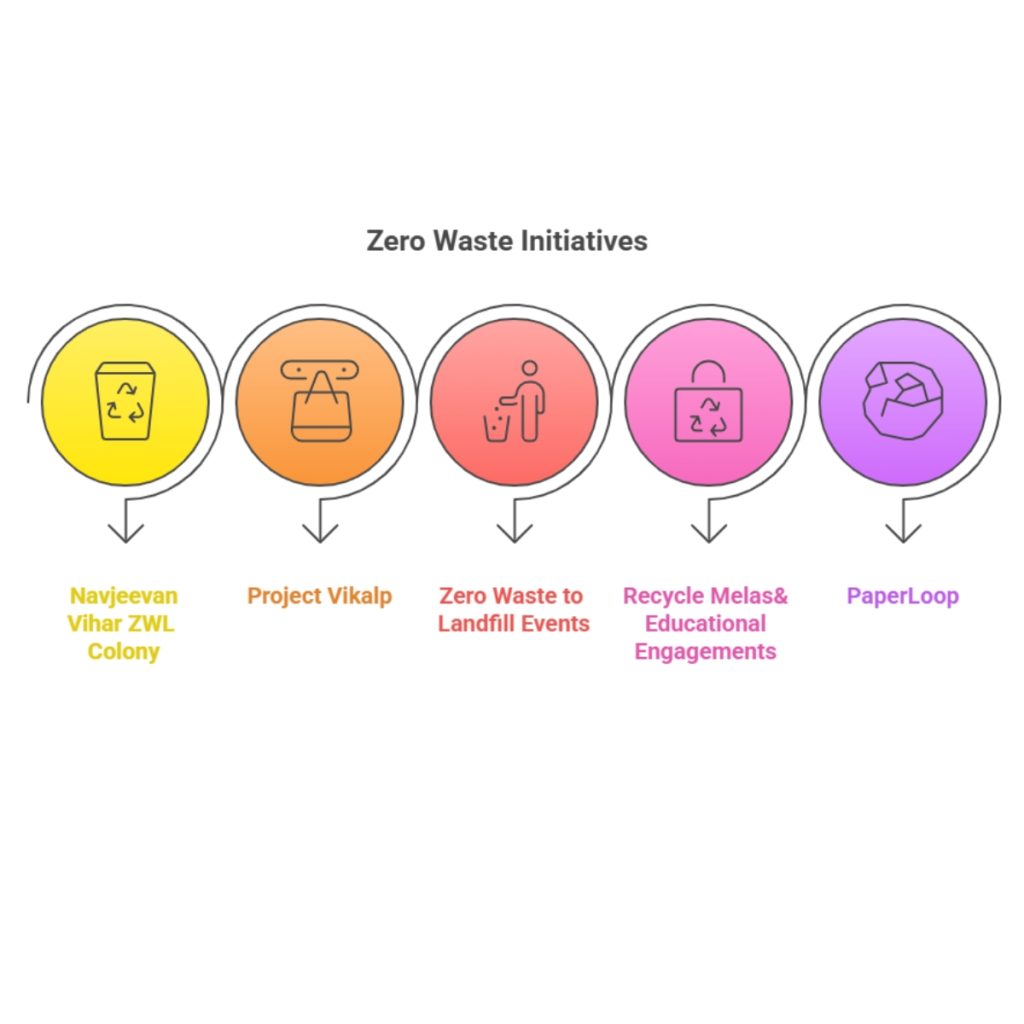
The following case studies highlight different approaches we have implemented: a colony that became a Zero Waste model, a city-wide “borrow-a-bag” movement to replace single-use plastics, waste-free festivals and cultural events, recycle melas that turn households, colonies, schools, colleges, and offices into sustainability champions, and PaperLoop, which closes the cycle on office paper. Together, they demonstrate that Zero Waste to Landfill is not a dream—it is a scalable reality that communities can achieve today.
Case Study 1: Navjeevan Vihar – A Zero Waste Colony
Navjeevan Vihar, a South Delhi colony once struggling with the everyday challenges of urban waste, has today transformed into a model Zero Waste community.
The journey began with 100% household-level segregation, ensuring that every bit of waste had a defined pathway. Wet waste was treated locally through composting units and leaf composters in parks.
The effort didn’t stop at composting. A dedicated RRR (Reduce, Reuse, Recycle) Centre was set up within the colony to channelise waste that could not be composted. This centre became a hub where residents could drop off old clothes, books, plastics, and even e-waste. To date, the RRR Centre alone has diverted more than 65 tonnes of material away from landfills and into productive reuse streams.
A key driver of success was the focus on social inclusion and incentives. Female domestic helpers were provided with biodegradable sanitary napkins for themselves and their daughters—an intervention that addressed both waste reduction and menstrual health. Children, often the most enthusiastic change agents, were engaged through puppet shows, Paint-a-Bag workshops, and interactive waste-awareness games that turned learning into fun. These efforts ensured that waste management became a community movement rather than a top-down directive.
The results speak for themselves: over 7 lakh kilograms of waste have been diverted from landfills, and the colony has been recognized by MoHUA and GIZ as a national best practice in community-led waste management.
Today, Navjeevan Vihar is not just a cleaner colony—it is a living example of how urban neighborhoods can take ownership of their waste, embed circular practices, and inspire replication across India.
Case Study 2: Project Vikalp – Borrow a Bag
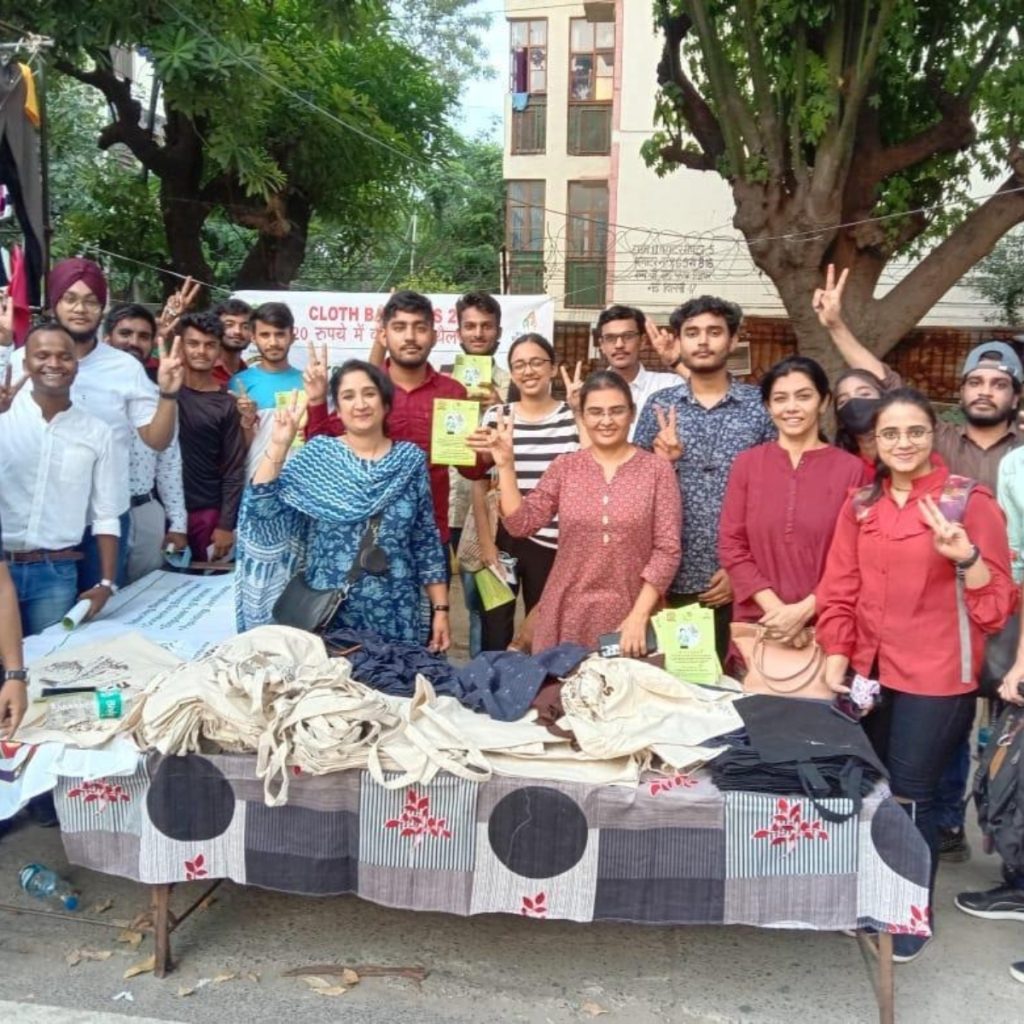
Delhi’s markets are drowning in single-use plastic bags. But with Project Vikalp we introduced a simple yet transformative solution: borrow, don’t buy.
Through more than 1,000 stalls set up across MCD, NDMC, and Delhi Cantt markets, shoppers now have access to 1.75 lakh cloth bags available on a deposit-refund basis.
These sturdy, reusable bags are stitched by women’s self-help groups using upcycled fabric, turning textile waste into both a resource and a livelihood opportunity.
To make participation seamless, each bag carries a QR code that directs citizens to the nearest Vikalp stall, embedding digital access into a grassroots movement.
The impact has been game-changing: over 1 crore plastic bags have been prevented from entering the waste stream, while a circular textile market has been created—one that not only reduces plastic but also empowers women through sustainable employment.
Case Study 3: Zero Waste to Landfill Events
Festivals and large public gatherings in India often generate mountains of mixed waste, much of which ends up in landfills. To change this narrative, the Why Waste Wednesdays Foundation developed a robust framework to make events truly Zero Waste to Landfill.
At these events, the approach is hands-on: teams go stall-to-stall and table-to-table, engaging with vendors and visitors to prevent food wastage and littering. Continuous public announcements keep sustainability at the forefront, while volunteers at every disposal point ensure strict segregation through real-time bin monitoring.
Disposables are replaced with steel thalis, compostable cutlery, and matka-water, proving that tradition and sustainability can go hand-in-hand. The system is backed by rigorous monitoring, reporting, and follow-up, ensuring that commitments translate into measurable results.
Case Study 4: Recycle Melas & Educational Engagement
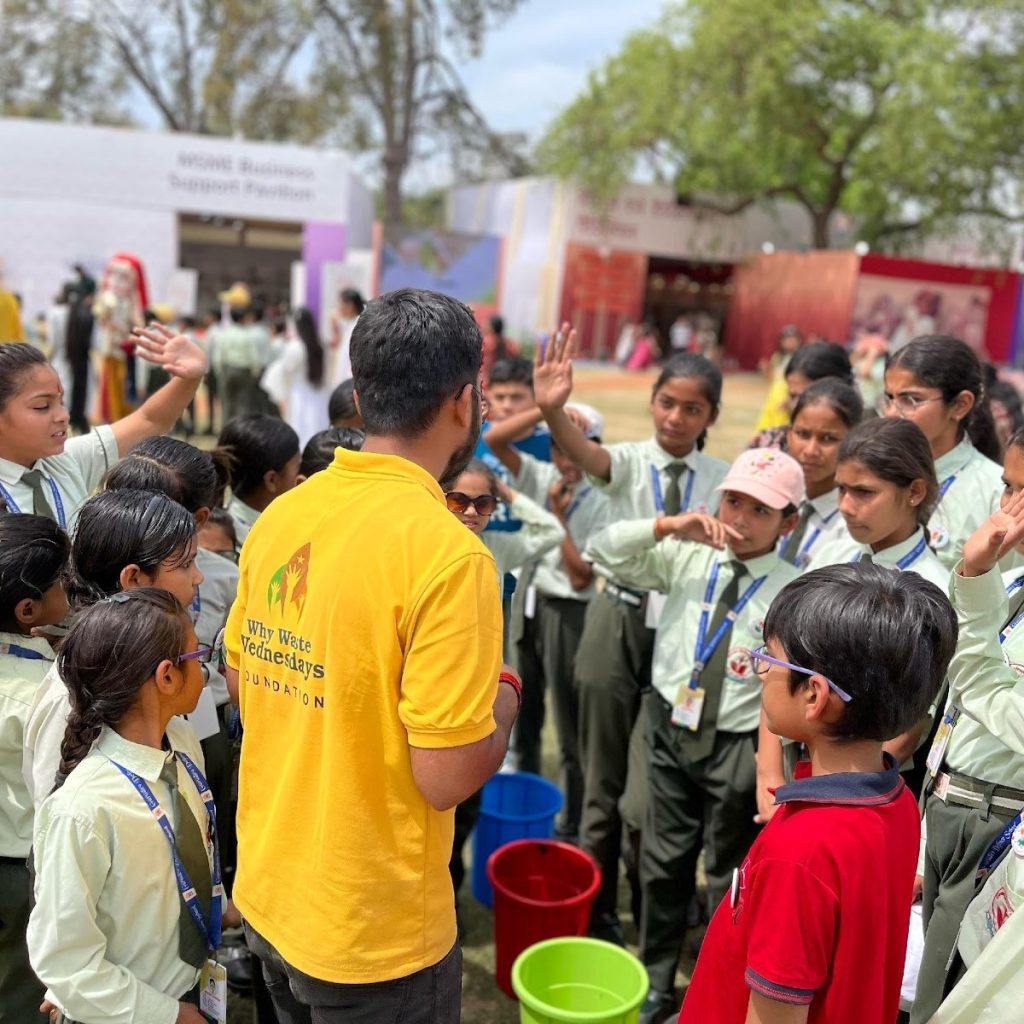
Urban communities often lack clear, structured ways to recycle their waste, leading to valuable materials being lost to landfills. To bridge this gap, the Why Waste Wednesdays Foundation pioneered Recycle Melas—community fairs that make recycling simple, accessible, and even fun.
At these melas, citizens can drop off their e-waste, plastics, expired medicines, and paper in exchange for useful items like notebooks, cloth bags, and stationery made from recycled materials. This exchange model reinforces the idea of circularity—waste is not just discarded, it comes back to the community in a new form.
Education plays a central role. The Students vs Plastics Toolkit, rolled out to more than 2,600 schools nationwide, equips young people with practical activities and awareness tools, empowering them to become champions of sustainability in their own communities.
The results have been both tangible and cultural: over 10 tonnes of waste have been safely channelized to authorized recyclers, while thousands of students and families now see recycling not as a burden but as a responsibility—and an opportunity.
Case Study 5: PaperLoop – Closing the Circular Paper Cycle
Office desks, schools, and hospitals generate mountains of paper waste every day, but most of it rarely finds its way back into the supply chain. To tackle this, the Why Waste Wednesdays Foundation launched PaperLoop, a pioneering program that closes the loop on paper usage.
Through PaperLoop, institutions like Safdarjung Hospital, schools, and offices deposit their waste paper into a structured collection system. In return, they receive recycled copier paper at a fixed exchange rate—creating a direct, visible incentive to recycle.
The initiative is backed by transparent reporting, which tracks the amount of paper collected, recycled paper distributed, and the environmental savings achieved. This accountability has built trust and encouraged more organizations to participate.
In just two weeks, PaperLoop managed to channelize over 4 tonnes of paper into recycling loops, effectively creating a market for recycled paper. By turning waste into a commodity, PaperLoop proves that circularity is not only possible but also practical and scalable.
Replicating Zero Waste to Landfill Models
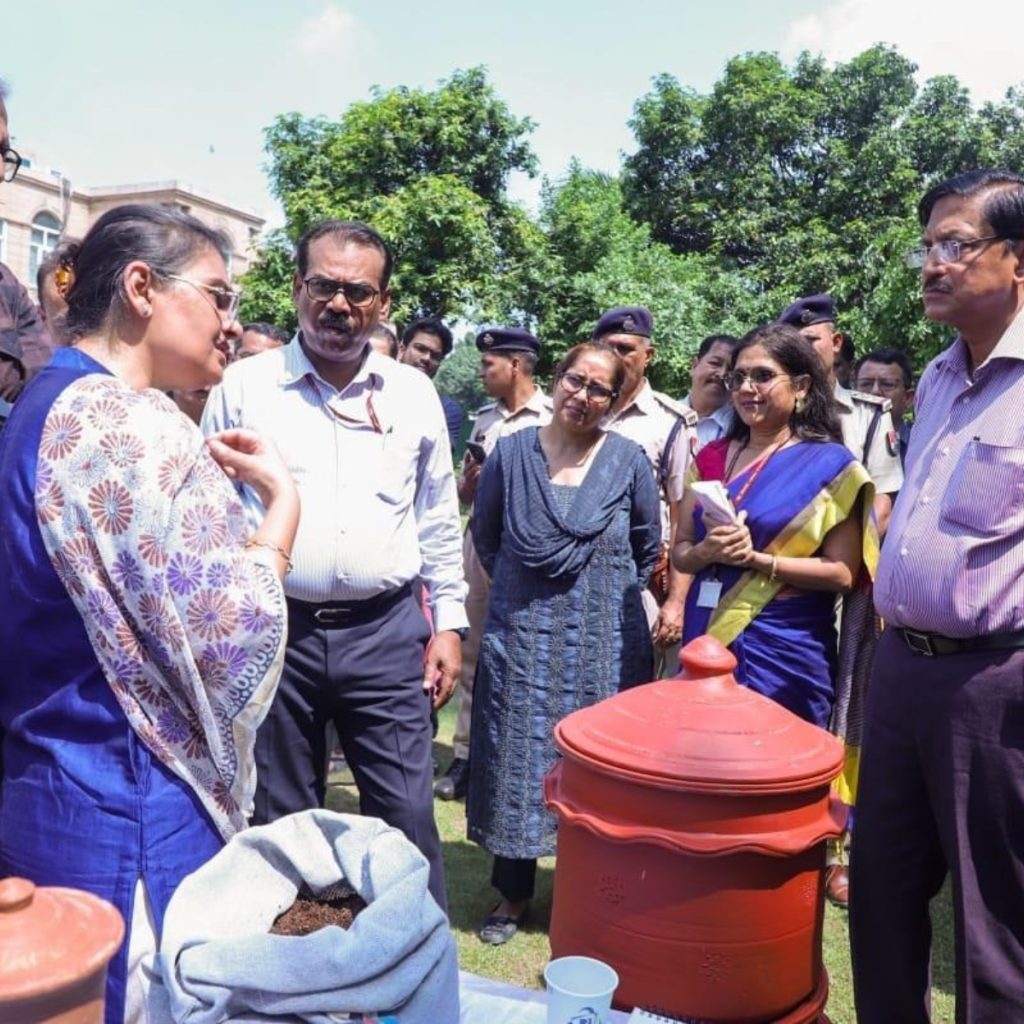
What began as a single colony-level transformation in Navjeevan Vihar has now evolved into a scalable model that is being replicated across diverse defence and institutional spaces.
Some of the notable replications include:
- Northern Railways Officers Enclave, S.P. Marg
- Northern Railways Officers Enclave, San Martin Marg
- DID Lines, Delhi Cantonment
- Taurus Officers Mess & Annexe, Delhi Cantt
- Albert Ekka Institute, Delhi Cantt
These prove that Zero Waste to Landfill is not a one-off success but a transferable framework that can be adapted to housing colonies, cantonments, markets, schools, and hospitals. Each replication strengthens the case that when systems are community-driven and accountability-driven, sustainability can scale.
Key Learnings
From these initiatives, several key lessons stand out that can guide others working towards a Zero Waste to Landfill future:
- Community engagement is essential. Sustainable systems thrive when citizens—especially children and women—are active participants. Their involvement ensures that practices like segregation and composting become part of daily life.
- Incentives drive participation. Small but meaningful rewards, such as biodegradable sanitary pads, recycled notebooks, or cloth bags, motivate people to stay committed and see value in their actions.
- Accountability keeps systems effective. Rigorous monitoring and transparent reporting ensure that segregation is followed and waste is handled responsibly, preventing lapses and building trust.
- Circularity must feel real. When people see their waste come back as compost, recycled paper, or upcycled products, the idea of a circular economy becomes tangible and believable.
- Scalability is achievable. From colonies to markets, schools, hospitals, and even national events, these models prove that Zero Waste to Landfill can be adapted across India’s diverse communities.
Conclusion
Waste management in India cannot be reduced to the question of where our garbage goes; it is fundamentally about how we as a society choose to live. At its core, it is about ownership, dignity, and community building. Every discarded item tells a story—not of waste, but of wasted opportunity—unless we reimagine it as a resource waiting to be transformed.
The journey from Navjeevan Vihar’s Zero Waste colony model to Project Vikalp’s fight against single-use plastics, from waste-free festivals at Rashtrapati Bhavan and Gurupurab to Recycle Melas and PaperLoop has shown us something profound: when citizens, institutions, and governments come together, Zero Waste to Landfill is not only possible, it is practical and replicable.
These initiatives prove that waste management is not just a municipal responsibility; it is a collective responsibility. Communities thrive when people see the benefits of their actions—compost turning into fertile soil, old clothes becoming useful again, or paper being reborn as notebooks. Incentives, accountability, and transparency make the system not just functional but inspirational.
The next step is clear: scale and collaboration. India cannot afford isolated success stories; it needs a movement. Replication across RWAs, schools, markets, hospitals, defence enclaves, and cultural institutions is already underway, but to truly reach scale, we must integrate Zero Waste principles into policy frameworks and everyday citizen habits.
This is not simply about reducing landfill loads; it is about building resilient communities, protecting public health, reducing greenhouse gas emissions, and safeguarding the future for generations to come. The global waste crisis may seem overwhelming, but India has the opportunity to show the world what is possible when community participation meets innovation and accountability.
As we stand at this crossroads, the message is simple: waste is not a burden—it is a resource. When circularity becomes our default and landfill our last resort, we will not only have solved a pressing environmental crisis, we will have created a society that values sustainability, equity, and dignity.
The time to act is now. Each colony, each school, each market, and each event that embraces Zero Waste to Landfill brings us closer to a future where nothing is wasted—and everything has value.

Ophthalmologist, Founder & Director
Why Waste Wednesdays Foundation