From Ideas to Impact: Asia-Pacific Leaders Convene to Accelerate Circular Transformation
Asia-Pacific | 2025
Taipei: 20-22 Nov’25
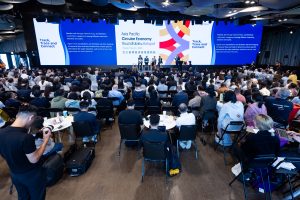
The International Council for Circular Economy (ICCE) was honoured to participate in the Asia Pacific Circular Economy Roundtable & Hotspot 2025 (APCER & Hotspot 2025), a landmark global forum that brought together over 500 participants from more than 50 countries across government, industry, academia, and research. The gathering united global changemakers around a shared ambition: advancing the circular transition across the Asia-Pacific region.
Hosted under the theme “Resources & Waste, and Our Future,” the forum served as a powerful platform to explore how innovative ideas can translate into effective governance frameworks and sustainable business models. Central to these discussions was the Circular Trilogy framework, which highlights the interdependence of policy, business, and societal systems in enabling a successful circular economy.
Advancing Circular Transformation Beyond Recycling
Key dialogues at APCER & Hotspot 2025 emphasized the urgent need to move beyond traditional waste management approaches towards systemic transformation. Participants underscored that true circularity extends far beyond recycling and requires rethinking product design, consumption patterns, infrastructure, and governance systems. Among the major highlights of the forum were:
- Strategic discussions on transitioning from waste management to system transformation, redefining circularity across value chains.
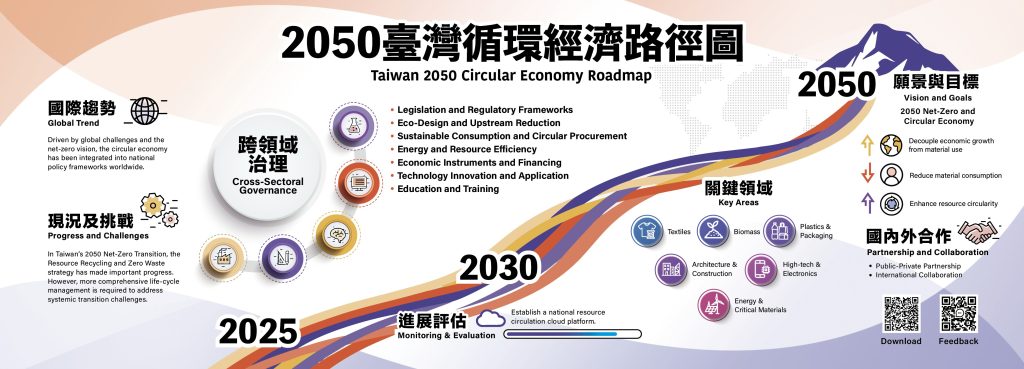
- The launch of Taiwan’s Circular Economy Roadmap, aligning policy, industry, and finance to deliver a cohesive national circular vision.
- Strengthened regional cooperation between Japan, India, and Australia, aimed at fostering policy reform, knowledge exchange, and shared circular innovation pathways.
- The “Asia Voices” session, which amplified perspectives from emerging markets and reinforced the importance of inclusive, cross-border collaboration to accelerate circular outcomes.
Leading Circular Collaboration
For the first time, the Asia-Pacific Circular Economy Hotspot is coming to the region — and Taiwan is proud to host it alongside the 2nd Asia Pacific Circular Economy Roundtable (APCER). This joint event positions Taiwan at the heart of Asia-Pacific circular economy collaboration and innovation. Under the theme “Leading Circular Collaboration”, the upcoming Asia-Pacific Circular Economy Roundtable & Hotspot 2025 will explore how to transform “good ideas”—circular strategies and innovations—into “good business” through “good governance” in the corporate, national and international levels. This systemic perspective, known as the “Circular Trilogy”, offers a clear and actionable blueprint for advancing circular economy development across the region, a statement issued by Circular Taiwan, one of the organizers of the event.
ICCE’s Contribution: Circularity as a Systemic Shift
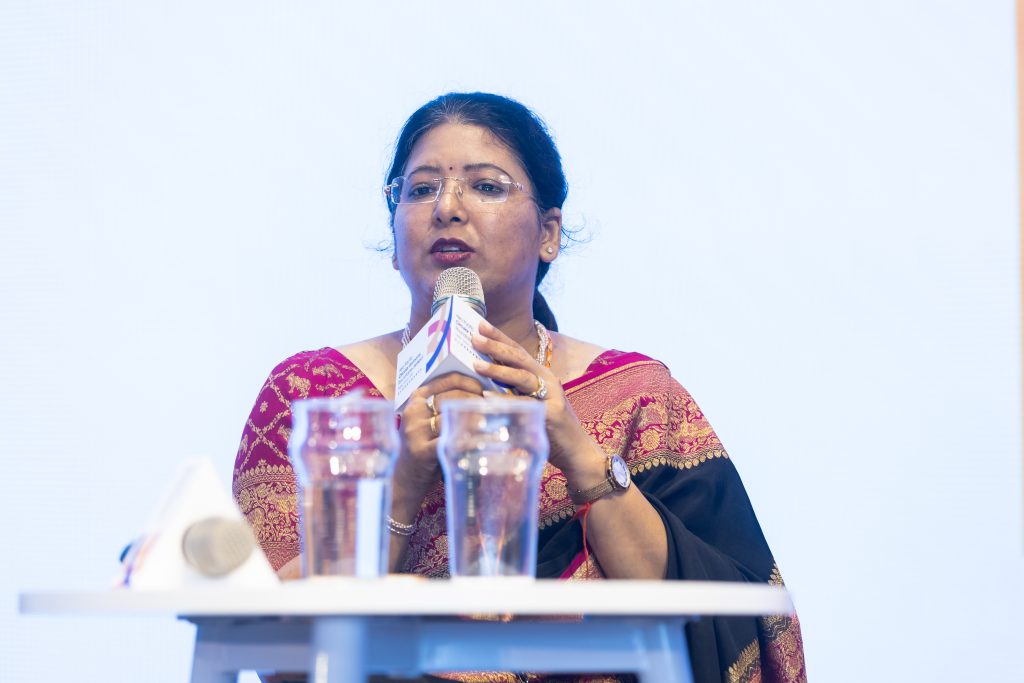
Representing ICCE, Ms. Shalini Goyal Bhalla, Managing Director, contributed to the discussions by reinforcing that circularity must be viewed as a comprehensive system change, not a downstream waste solution. She highlighted the critical role of the Right to Repair, behavioural change, and responsible design and consumption in building resilient, low-carbon, and inclusive cities.
Ms. Bhalla emphasized that circular economy strategies must integrate urban planning, product longevity, citizen engagement, and policy innovation to ensure long-term environmental and socio-economic impact.
Turning Circular Blueprints into Action
APCER & Hotspot 2025 marked an important milestone in translating circular economy blueprints into actionable pathways for the Asia-Pacific region. The forum demonstrated the power of collaboration across sectors and geographies in addressing shared resource challenges and advancing climate and development goals.
The International Council for Circular Economy reaffirmed its commitment to championing collaboration, innovation, and systemic change, working closely with global and regional partners to drive a just and effective circular transition. As the Asia-Pacific region continues to play a pivotal role in global economic growth and resource consumption, platforms such as APCER & Hotspot 2025 are critical in shaping resilient futures aligned with net-zero and sustainability ambitions.

Circular Collaboration for Climate Crisis
The Asia-Pacific region, a global manufacturing hub with extensive industrial supply chains. However, it faces significant environmental burden due to the degenerative linear economic model. The circular economy offers a systemic solution—restoring and regenerating resources across industries and societies.
Taiwan is championing this shift, inviting governments, businesses, academia, and civil society to take action through the “Circular Collaboration for Climate Crisis (CC4CC)” initiative. It aims to strengthen cross-border, cross-industry, and cross-supply-chain collaboration, ensuring a just transition in addressing the climate crisis.